Calcium reactor through the Co2 Port
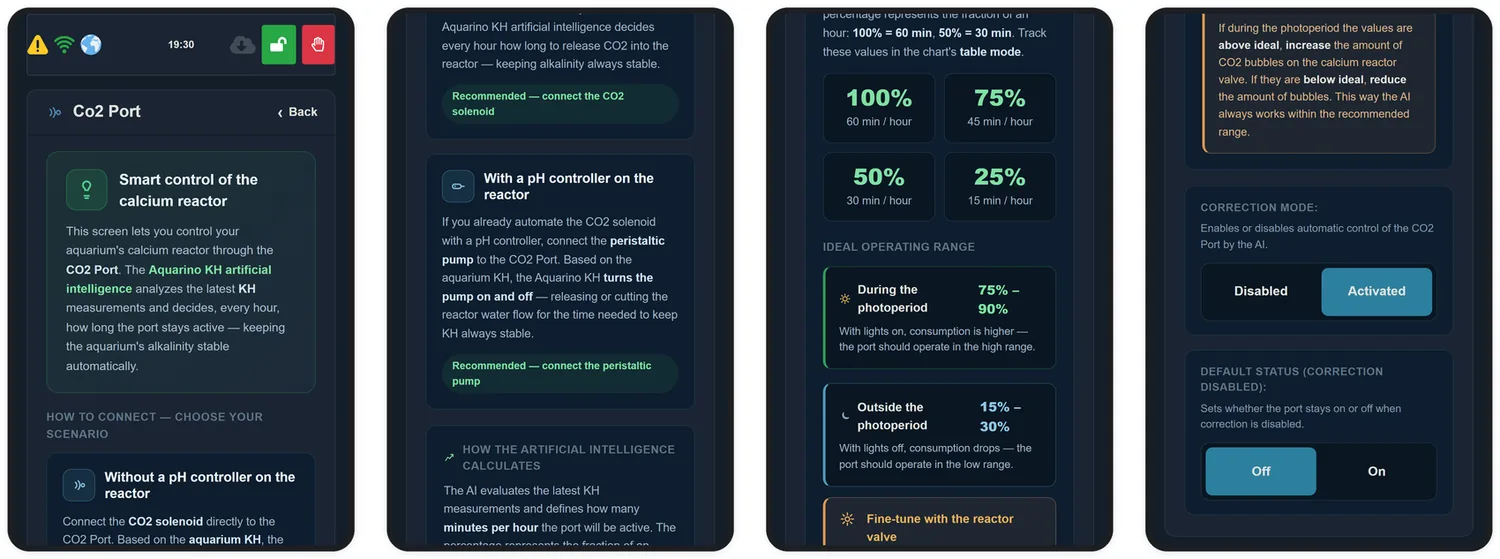
For anyone running a calcium reactor, the Aquarino KH controls the Co2 Port — a power outlet that switches on and off according to what the aquarium needs. It is the equipment's most sophisticated feature and the one that most reduces your manual work.
17.1 The decision, in one sentence
At every measurement, the equipment decides how many minutes the CO2 port stays on until the next one.
| What happens | |
|---|---|
| 1 · Measures | The aquarium KH, every hour, 24 hours a day |
| 2 · Decides | Compares it with your target and with what happened over the last 24 hours |
| 3 · Drives | Switches the port on for the calculated time. It switches off by itself |
That is 24 decisions a day, 8,760 a year. There is no factory table and no programmed schedule: each unit builds its own model from what it measures in your aquarium. Two aquariums with the same target receive CO2 in different amounts and at different hours, because they consume differently.
17.2 How to connect — pick your scenario
| Your reactor | What to plug into the Co2 Port |
|---|---|
| Without a pH controller | Connect the CO2 solenoid directly to the Co2 Port. The equipment decides, every hour, how long to release CO2 into the reactor. |
| With a pH controller | Leave the solenoid with your pH controller and connect the peristaltic pump to the Co2 Port. The equipment then releases or cuts the reactor's water flow for the time needed. |
17.3 What it looks at to decide
Two things, and each answers a different question.
| What it looks at | The question it answers | Why it helps |
|---|---|---|
| Where KH is now | Where are we? | A single reading, compared with the target. It is trustworthy right away, because the reading error is well below the margin — and it is what makes the equipment react quickly to a water change |
| Where it went over 24 h | Where are we heading? | The difference between KH now and KH 24 hours ago, discounting what the doser added. It is what stops the equipment chasing noise |
17.4 Why 24 hours, and not 1 hour
Two reasons, and both belong to the aquarium — not to the equipment.
| Reason | Explanation |
|---|---|
| Noise | Over 1 hour, the natural variation of the reading is larger than the real consumption of that period: measuring the rate in that window would be reading noise dressed as information. Over 24 hours the signal is roughly 14× larger than the noise. |
| Photoperiod | Corals consume with the lights on and almost nothing in the dark. A 12-hour window overnight would give nearly zero; 12 hours of daylight would give double the average. Over 24 hours the whole day enters once and the effect cancels itself. |
17.5 It learns your aquarium's routine
Nobody programs a lighting schedule. The equipment discovers your aquarium's rhythm from how it responds — and the photoperiod curve appears on its own in the data.
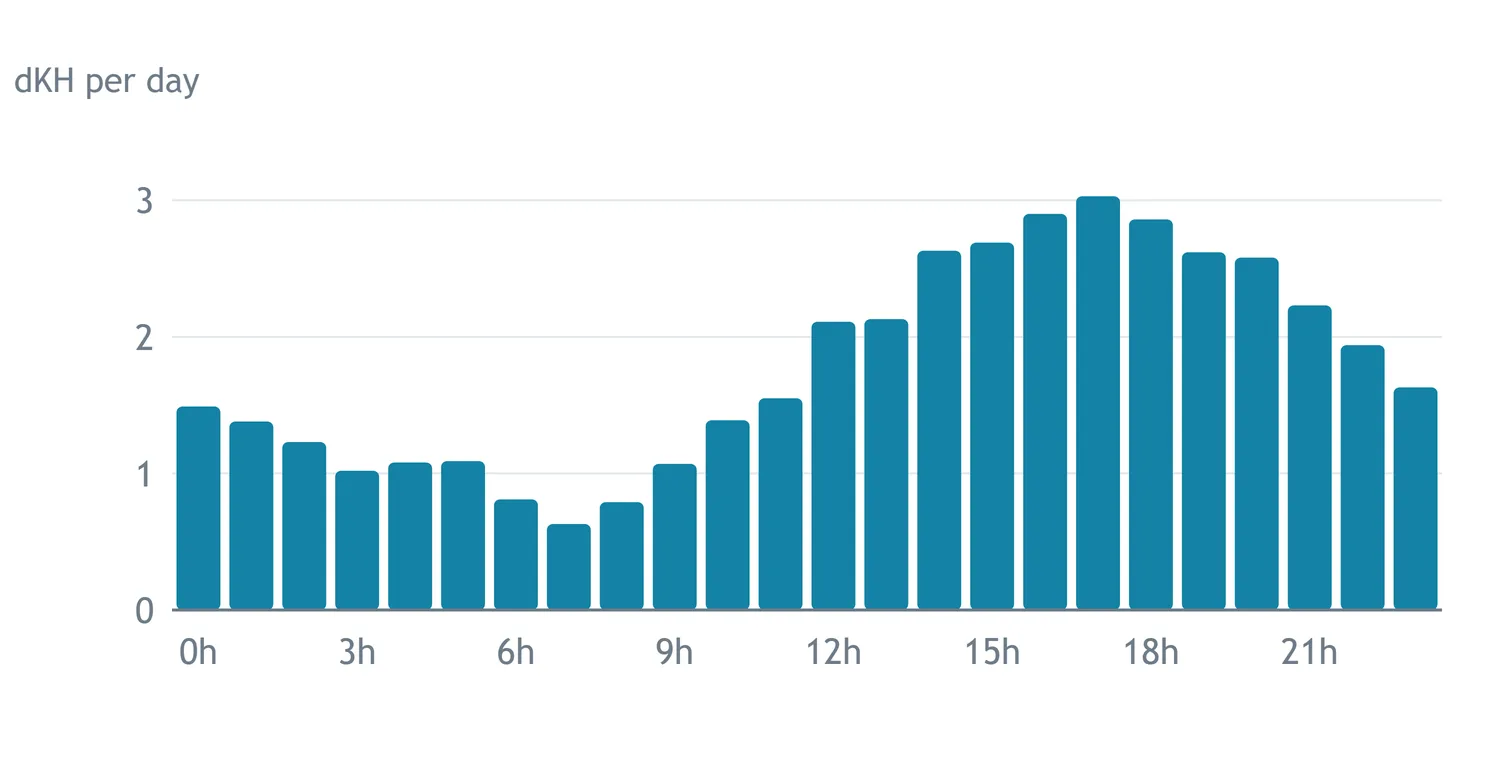
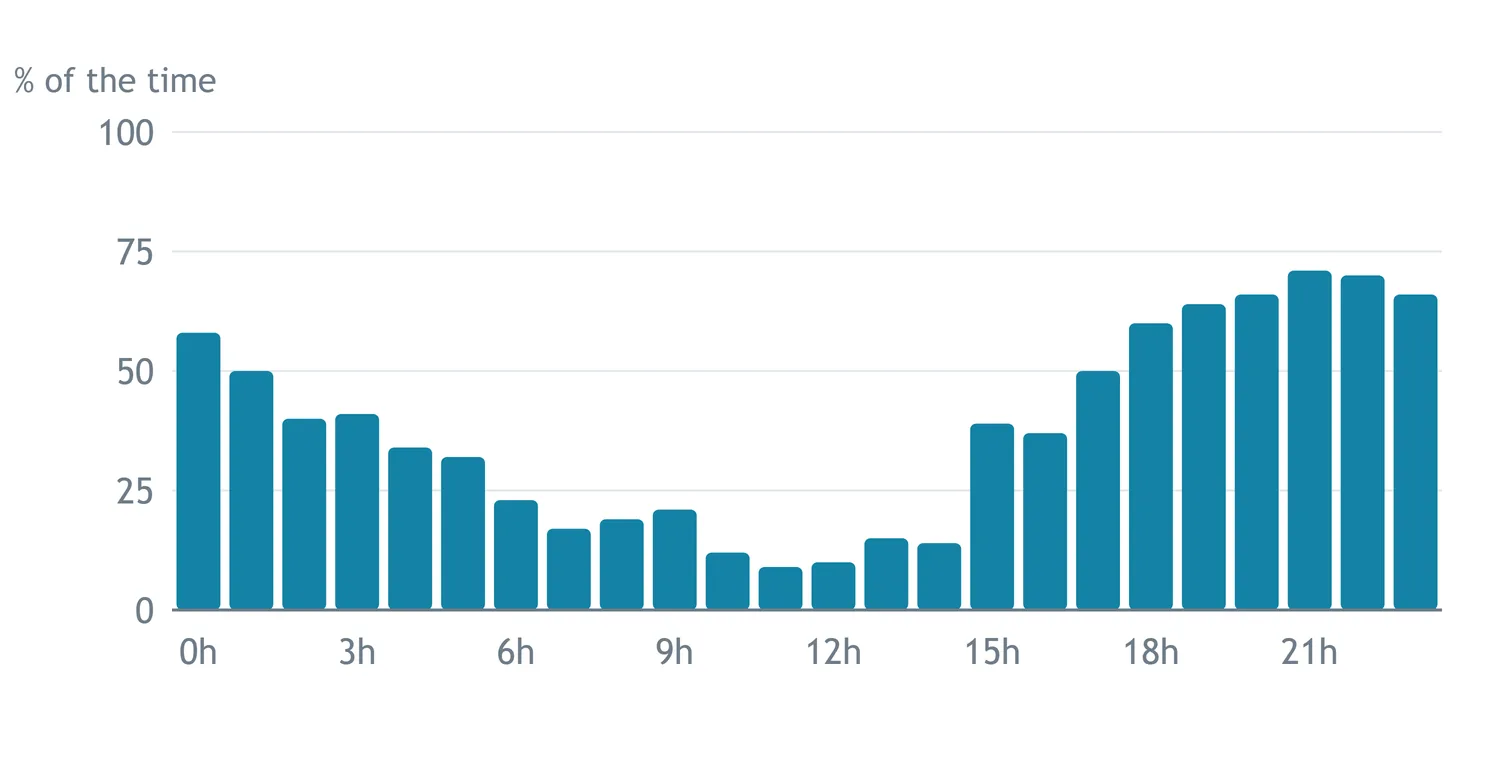
Knowing which hours the aquarium consumes most, the equipment delivers more CO2 in exactly those hours:
17.6 The result: KH swings less
Same aquarium, same total CO2 for the day. Only the hours it is delivered change — and the difference shows in stability:
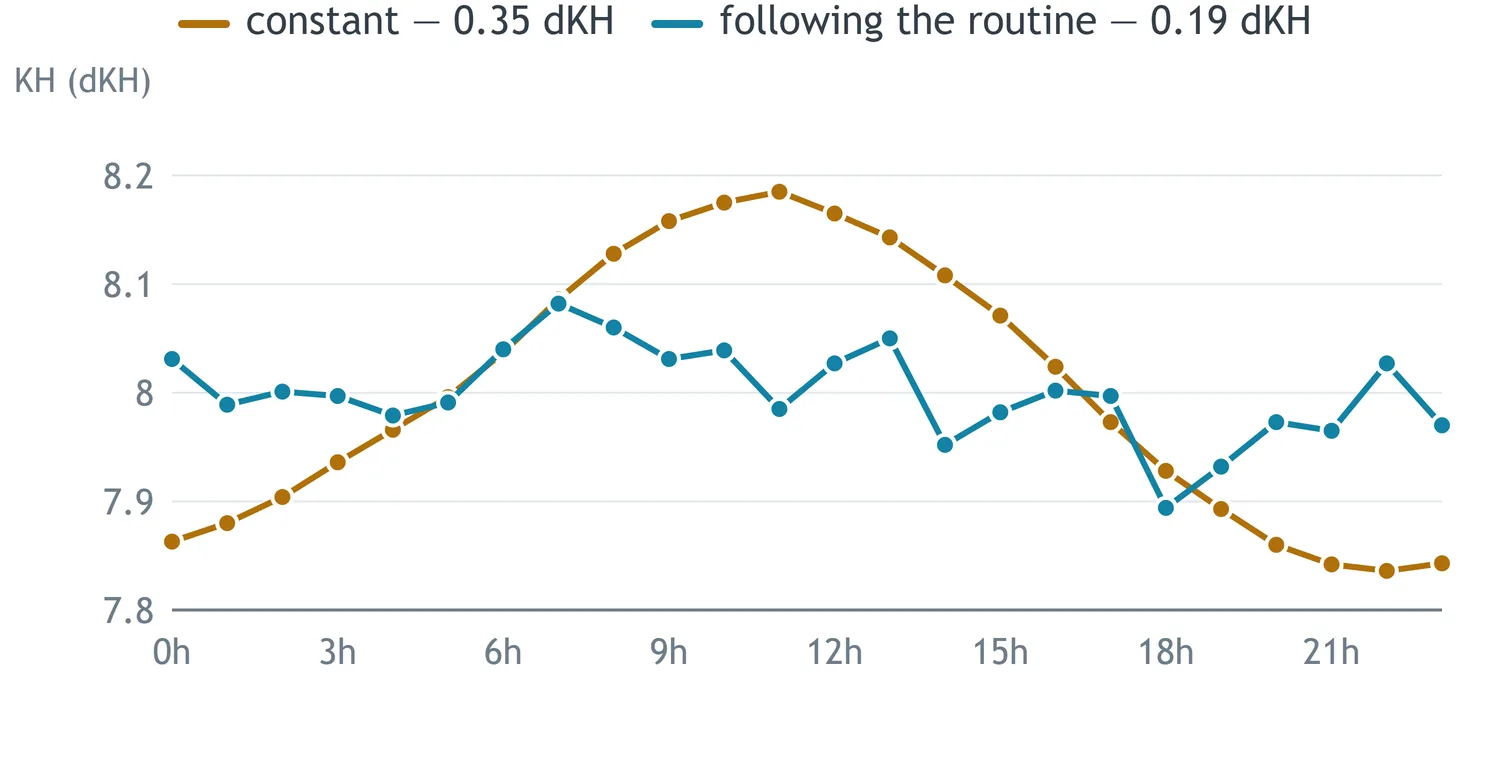
Less swing across the day means less stress for corals: KH spends more time near the target and less time at the extremes.
17.7 Three safety stops
None of them depends on you configuring anything.
| Stop | What it does |
|---|---|
| Daily limit | The equipment never tries to move KH by more than 1 dKH a day. More CO2 means more acid entering the aquarium — reactor effluent leaves at a pH near 6 — and abrupt alkalinity change stresses corals |
| Automatic cut | If KH climbs well above your target, the port is cut immediately and only returns once KH comes down. It does not wait for the next measurement |
| Distribution does not add up | The daily routine can reorganise the total, never increase it |
17.8 Ideal range and adjusting the bubble counter
Your job here is just one thing: set the reactor's bubble counter so the port works within the recommended range. Do that, and the equipment handles the rest.
| Period | Ideal range | Why |
|---|---|---|
| During the photoperiod | 75% – 90% | With the lights on consumption is higher — the port should run in the upper range |
| Outside the photoperiod | 15% – 30% | With the lights off consumption falls — the port should run in the lower range |
17.9 How to read the port percentage
Four readings cover almost everything you will see day to day:
| What you see | What it means | What to do |
|---|---|---|
| It varies a lot across the day — 10% in the morning, 70% at night | Normal. That is your aquarium's routine, learned | Nothing |
| It sits at 0% for some hours, with KH above target | Normal. It is correcting downward, on purpose | Nothing |
| It climbs day after day and KH barely follows | The aquarium started consuming more, or the reactor is losing strength | Watch for 2 to 3 days |
| It sits at 100% for hours and KH does not rise | The reactor has reached its limit. Software cannot fix this | Check CO2, media and flow |
17.10 How to read the graph across days
The shape of the graph tells the story. Three shapes matter:
| Shape | What it is | What it means |
|---|---|---|
| Wavy and steady | Rises and falls every day in the same pattern, with no long-term trend | This is the healthy state. The equipment found its point and is holding it |
| A step up, then settles | Climbs over a few days and then stabilises at a higher level | The aquarium started consuming more and the equipment followed. Expected after coral growth or a lighting change |
| Climbing without stopping, touching 100% | Grows day after day and starts hitting the ceiling often | The reactor is falling behind. Check CO2, media and flow before KH drops |
17.11 When the reactor cannot keep up
This is the case where the equipment needs you. It shows the symptom; the cause is physical.
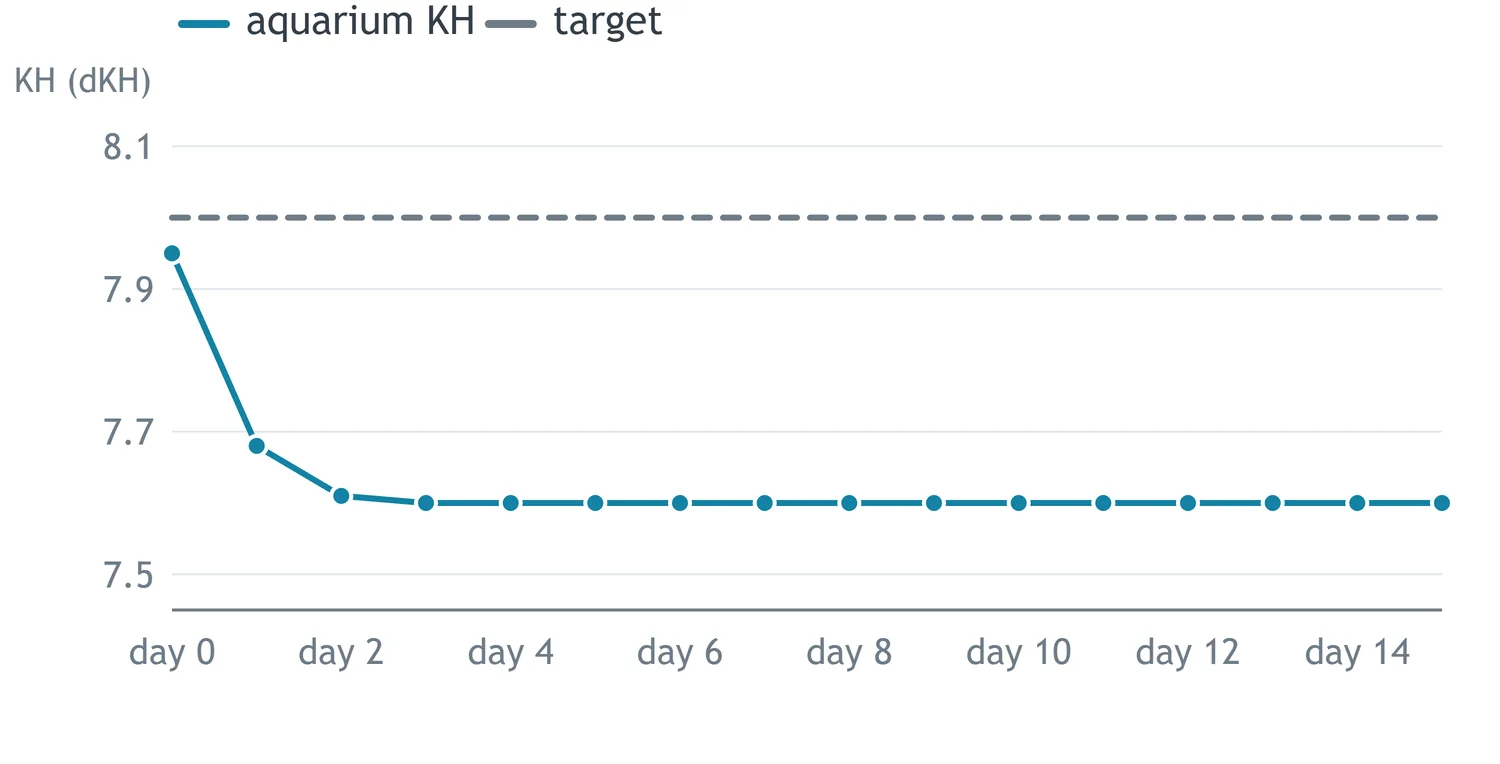
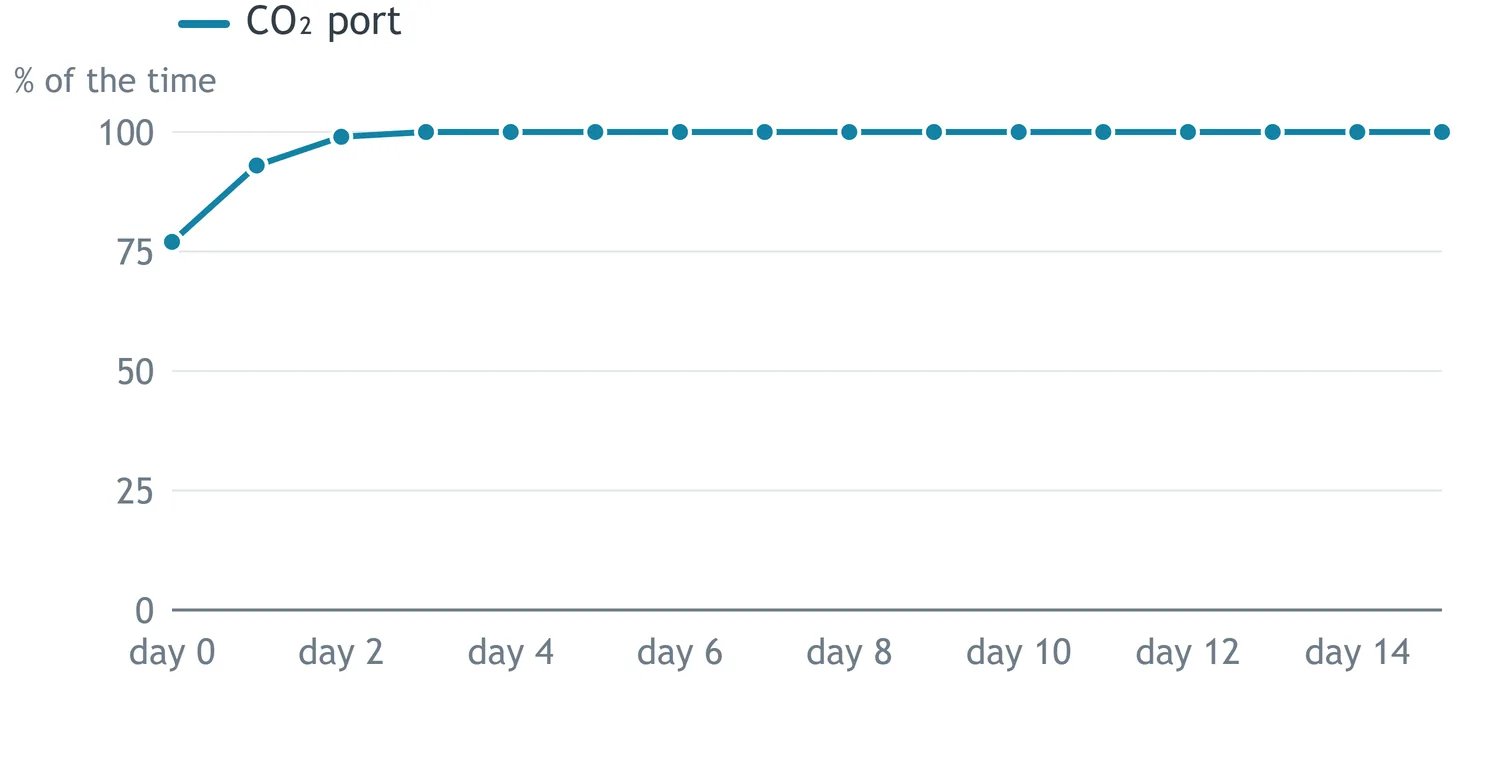
What to check, in this order:
- CO2 cylinder empty or low on pressure;
- Calcium media exhausted;
- Effluent flow too low;
- Reactor undersized for the aquarium's volume.
17.12 What the equipment does not do
| Does not | Detail |
|---|---|
| Does not guess your lighting schedule | It learns the routine from the aquarium's response. If you change the photoperiod it takes a few days to relearn — and relearns on its own |
| Does not diagnose the reactor | It shows that the port is at maximum and KH is not rising. The conclusion about CO2, media or flow is yours |
| Does not replace your own reading | The equipment acts on what it measures. If the pH probe is poor, the measurement is poor — and so is the correction. Keep calibration current |
17.13 Correction mode and default status
| Setting | What it does |
|---|---|
| Correction mode | Enables or disables automatic control of the Co2 Port. It ships Disabled |
| Default status | Sets whether the port stays on or off when automatic control is disabled, or when the equipment has no basis to decide — during filling, emptying, or right after startup |