Download PDF
Aquarino KH — User Manual · Printed from manual.aquarino.com.br/en/kh/22-aquarium-ph-and-co2/
Aquarium pH and CO2
The Aquarino KH calculates the water's CO2 from the KH and pH of each measurement, and also shows the CO2 in the air. Read together, the two say a lot about the aquarium's gas exchange and about what the corals are getting.
22.1 CO2 Air and CO2 Water: how to read them
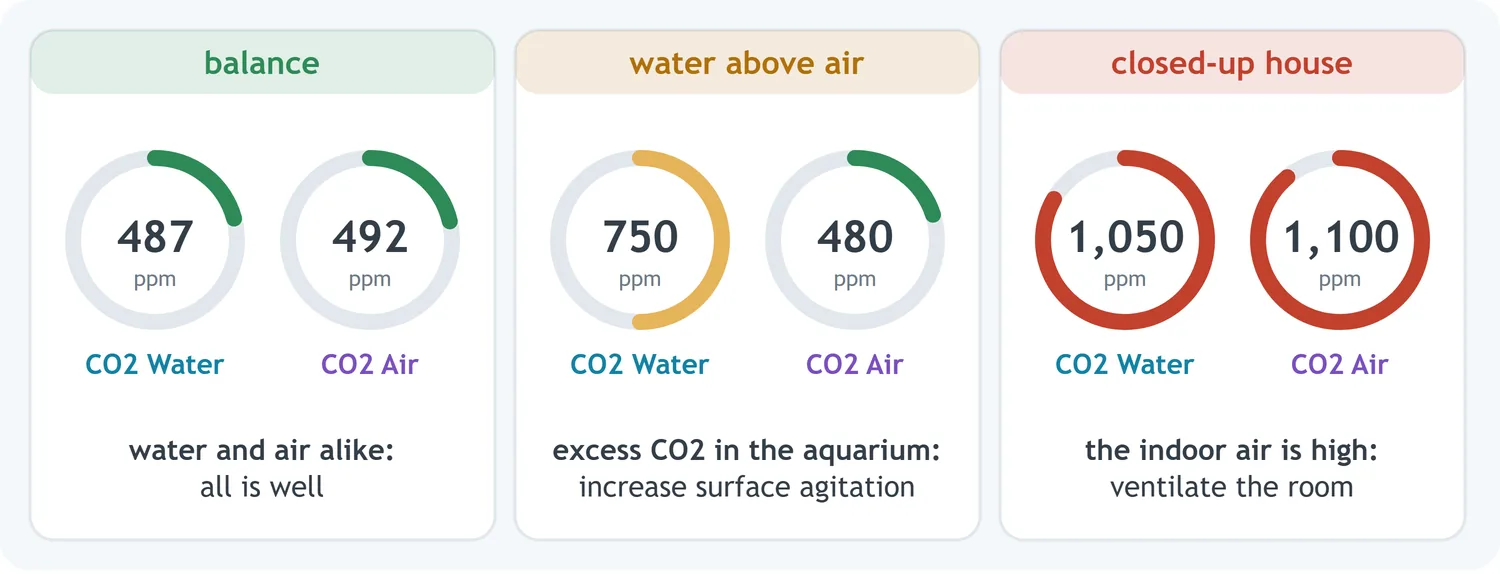
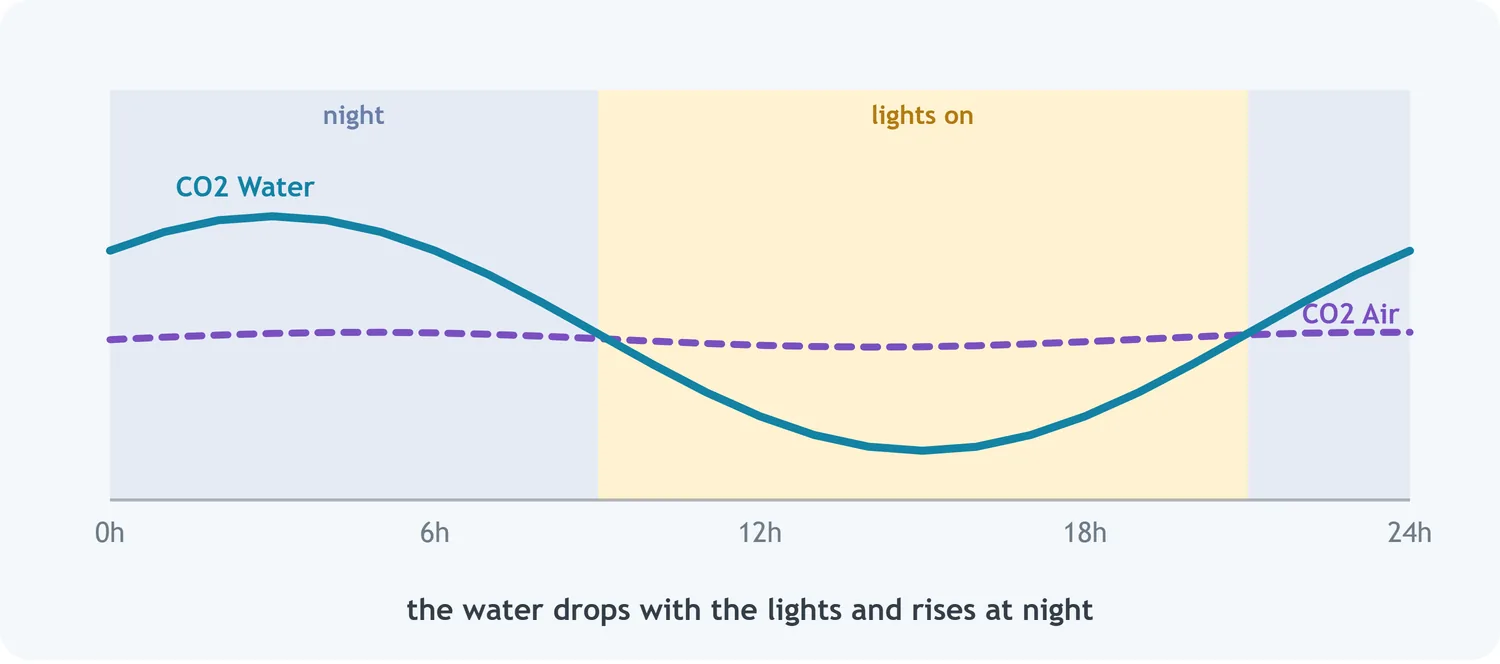
CO2 Air shows how much CO2 there is in the air of the room where the equipment sits. CO2 Water shows how much CO2 there is in the aquarium water, on the same scale as the air, in ppm. That is why you can compare one with the other: similar, water and air are in balance; water well above, there is surplus CO2 in the aquarium; water below, the life in the aquarium is using up CO2.
Keep the Aquarino KH in the same room as the aquarium: CO2 Air reflects the air where the equipment is, and that is the air that reaches the aquarium through the surface and the skimmer.
What to do in each situation
| Situation | What is probably happening | What to do |
|---|---|---|
| Water close to the air | The water exchanges gas well with the air | Nothing |
| Water well above the air, with normal air (400 to 600) | The surplus CO2 is inside the aquarium: little surface agitation, a weak skimmer, a lot of respiration at night or the calcium reactor outlet | Increase surface agitation and the skimmer's air intake; check the reactor outlet |
| Water below the air, with the lights on | Algae and corals using up CO2 in photosynthesis | Nothing: it is normal during the day |
| High air (above about 1,000) and the water close to it | The CO2 is coming from the house: a closed room, lots of people, a gas heater | Ventilate the room, draw the skimmer's air from outside or use a CO2 filter on the skimmer's air intake. Do not raise KH |
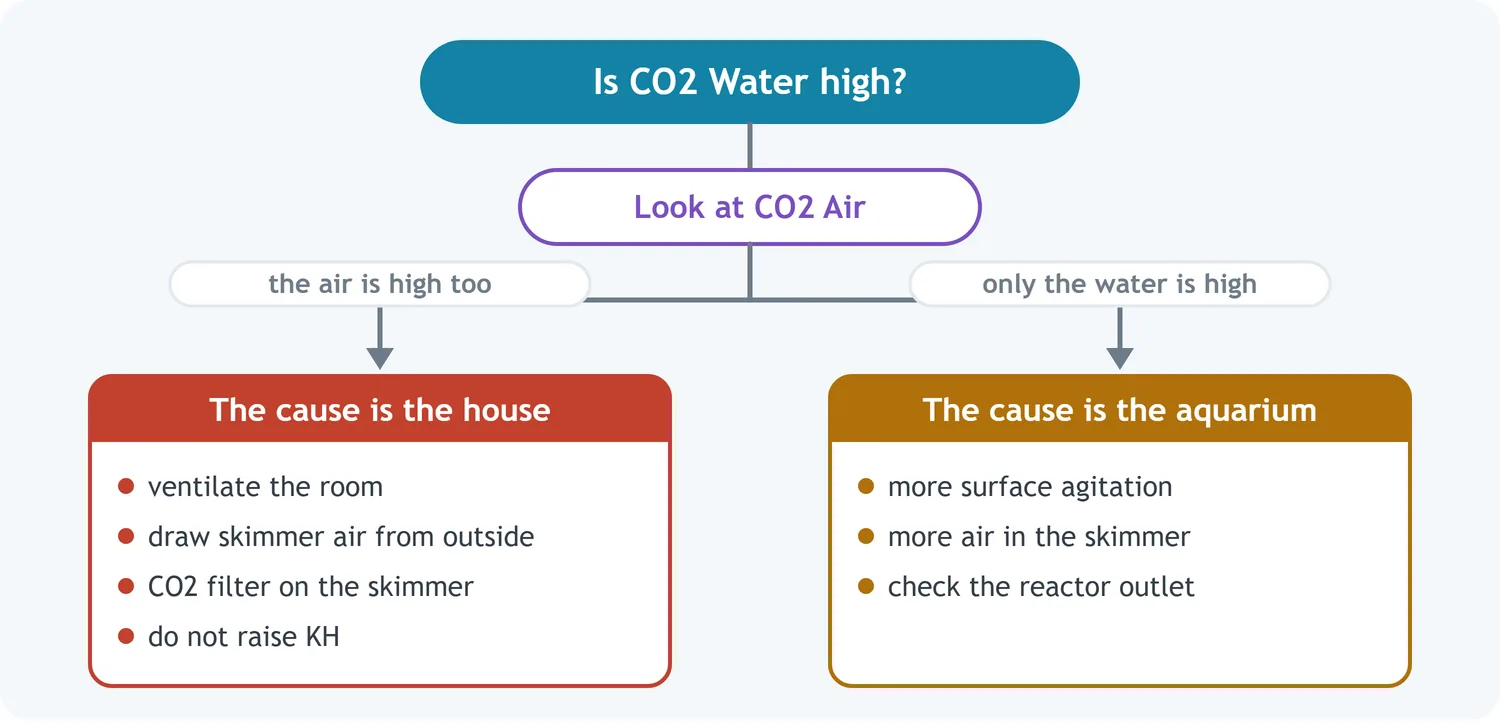
| Water above about 800 | Coral calcification starts to drop | Find the cause: if the air is high too, it is the house; if only the water is high, it is the aquarium |
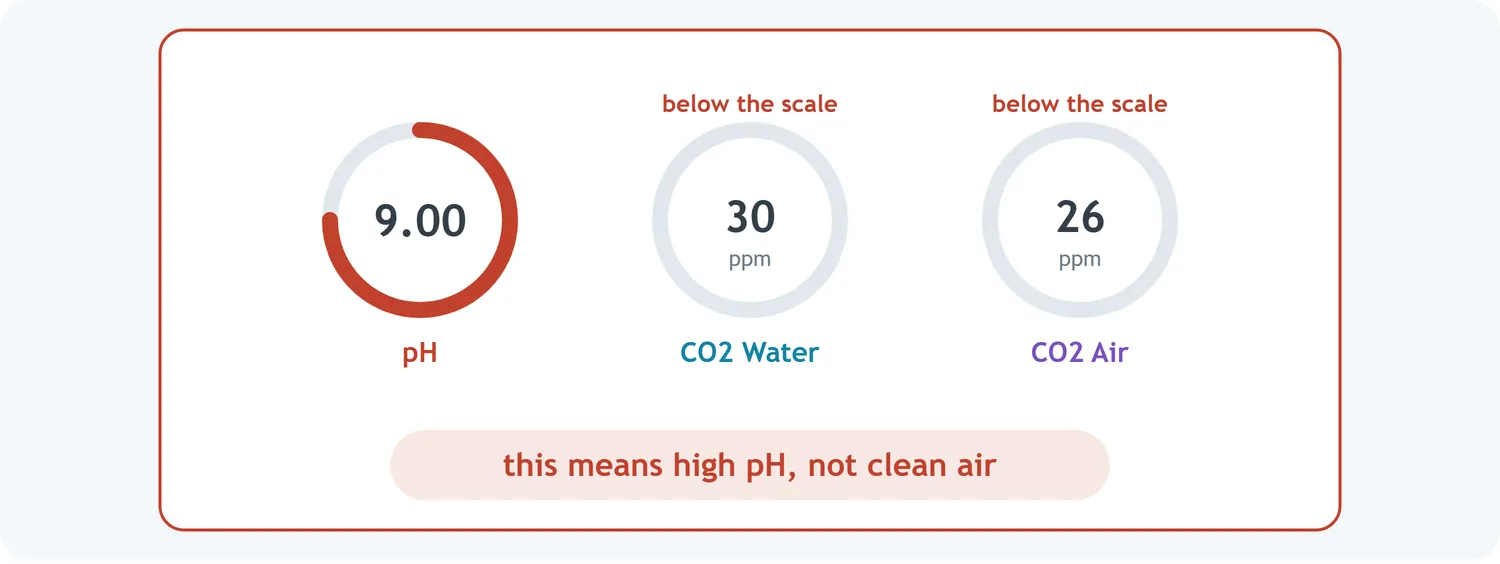
| Both very low, well below 300, with pH near 9 | It is not pure air in the room: it is a sign of high pH in the water, common with too much kalkwasser | See section 22.2 |
The ranges for corals
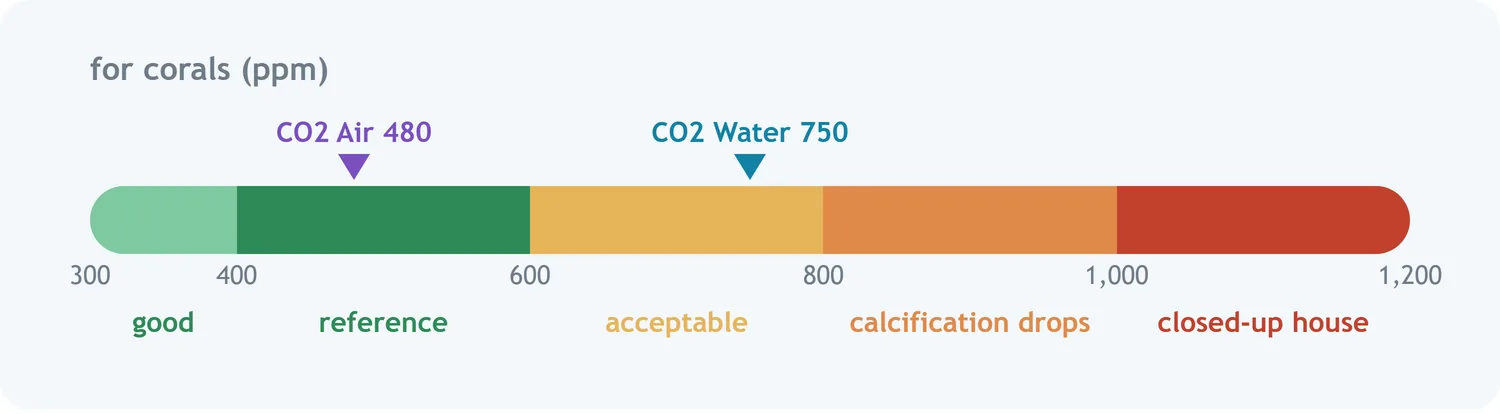
The same ranges apply to both indicators:
| CO2 (ppm) | For corals |
|---|---|
| 300 to 400 | Good. With high KH, the risk of precipitation goes up |
| 400 to 600 | The reference: today's ocean, with about 420 outdoors |
| 600 to 800 | Acceptable, common in well-ventilated homes |
| 800 to 1,000 | Calcification starts to drop |
| above 1,000 | A closed-up house. Acidification studies show calcification 15 to 40% lower than at 400 ppm |
22.2 pH near 9 with kalkwasser
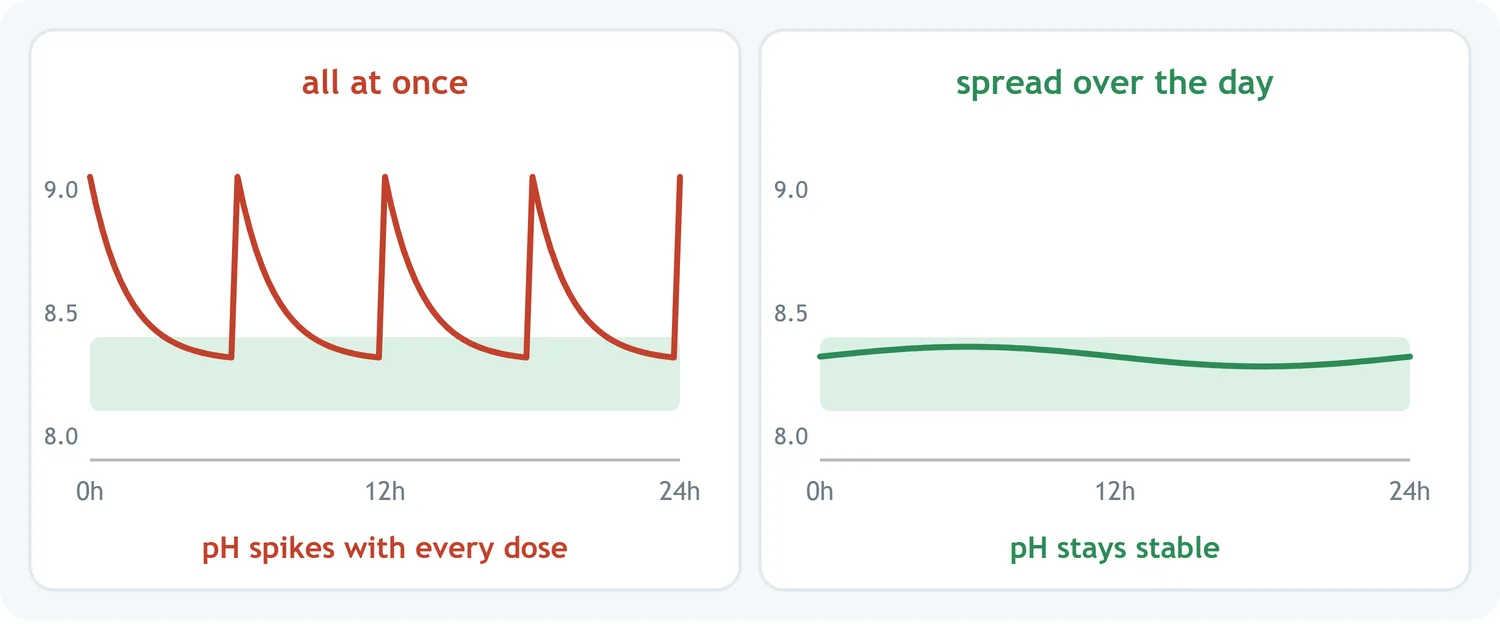
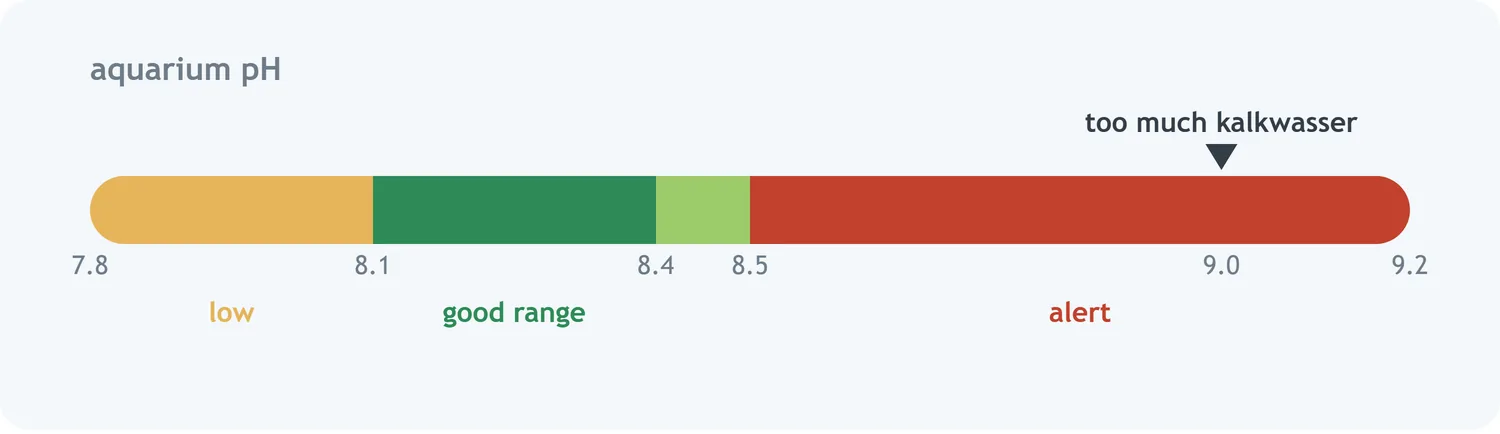
Kalkwasser replenishes calcium and alkalinity, but it also raises pH. If the dose is more than the aquarium consumes, pH sits near 9 all the time — and that harms the reef.
How it shows on the Aquarino KH
- pH near 9 on the screen, barely changing between day and night.
- Low KH, even with replenishment up to date.
- CO2 Water and CO2 Air very low, well below 300 ppm. This does not mean pure air in the room: it is a sign of high pH in the water, and the numbers go back to normal when pH comes down.
What pH near 9 causes
- Calcium and alkalinity come out of the water as a white deposit on pumps, heaters and sand, and KH drops.
- Corals get less of what they use to grow: growth slows down, and some show signs of stress.
- Ammonia becomes more toxic at high pH.
What to do
- Reduce the kalkwasser dose and spread it through the day — slower dripping or top-off — instead of large doses all at once.
- Aim for pH around 8.3 to 8.4, bringing it down gradually over several days.
- If KH needs support while you cut back on kalkwasser, use an alkalinity supplement — the Alkalinity Doser can do this on its own (Chapter 15).
- Check pH with an independent test or meter.
- Watch for white crusts on the equipment: as long as they keep appearing, pH is still high.